I don’t usually read books in translation.
I should, because seeing as I only read in French and English, that severely limits the sorts of things I read. But what started as an aversion to reading French in translation somehow got me here, to where I don’t ever really seek out books in translation. It’s a mistake on my part; every once in awhile, I’ll accidentally check a book out of the library and realize only once I get it home that it was originally written in another language. And pretty much every time, I fall in love.
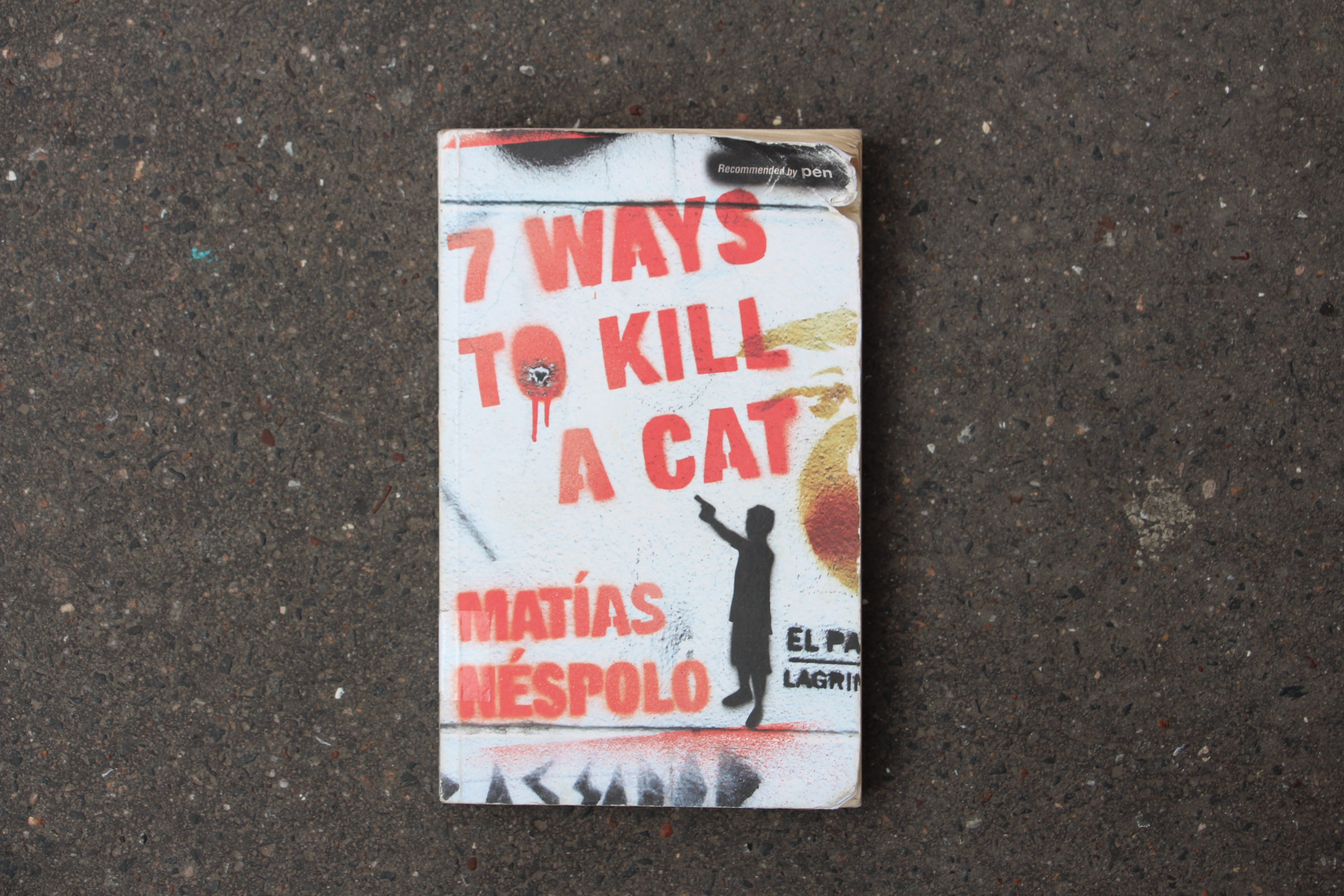
Exhibit A: 7 Ways to Kill a Cat, a book by Argentine MatÃas Néspolo. Set in the barrios of Argentina, the book follows two teenage boys as they get caught up in the drug wars that have surrounded them for the entirety of their young lives.
I think one of the things I liked most about this book was the waywardness of the characters’ trajectories: the path taken through the book is so unlike the one craft novels tell American authors we need to follow, which makes it refreshing and new for someone used to reading (and writing) that sort of style. The main desire that propels the main character, Gringo, forward, is that of knowledge, and while some of his questions get answered, the vast majority do not. For that reason, it feels far more realistic than many books I’ve read by American authors, but it also unfortunately led to some not-so-impressed reviews from Anglophone readers, who were also quick to pick a bone with Gringo’s discovery of Moby Dick and the (admittedly often heavy-handed) comparisons between Ishmael’s plight and Gringo’s.
Readers also took issue with the translation itself: Frank Wynne’s translator’s note at the beginning of the book notes that he has elected to retain certain elements of Argentine slang, such as having characters call one another socio and che instead of “mate” or “bro,” but one has to draw a line somewhere (or risk alienating the reader), and some reviewers criticized Wynne’s use of London slang (arse was one that stood out to me, as an American reader).
Translation is an imperfect science; the best you can hope for is to draw people into a world that they couldn’t inhabit on their own – a job that is also placed on the shoulders of the novelist. Together, Néspolo and Wynne have done just that.